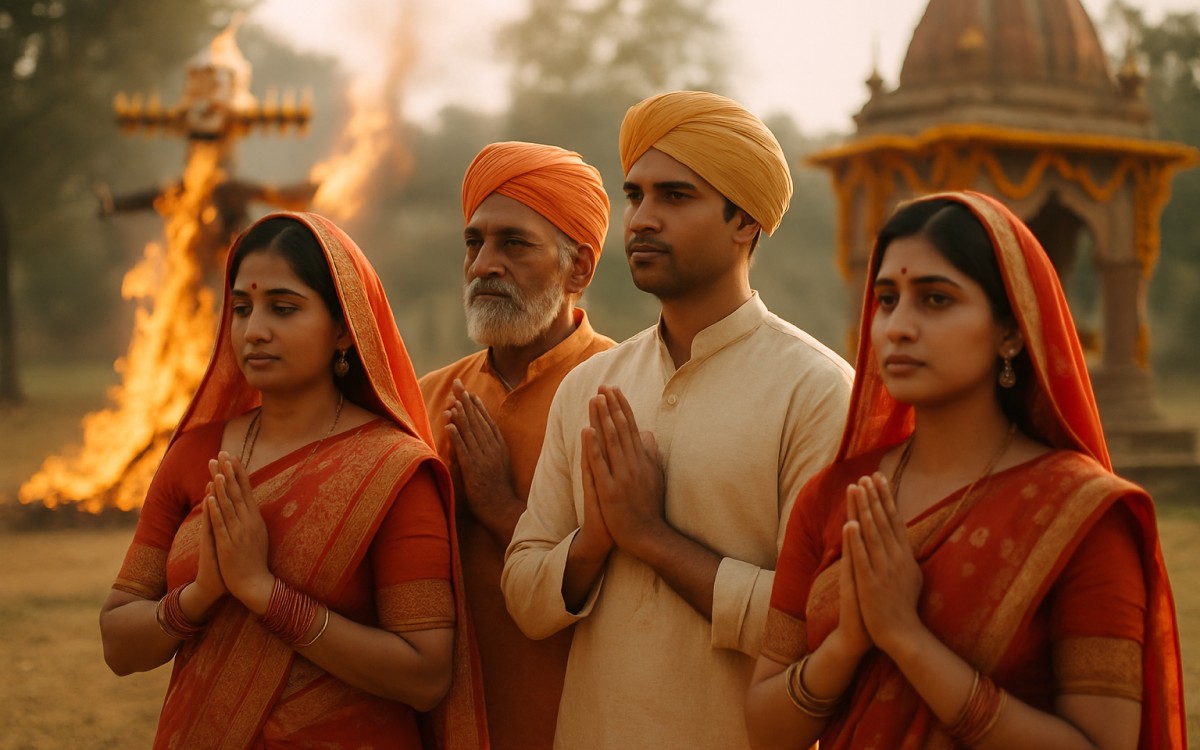
Dussehra is a widely observed festival that symbolises the triumph of righteousness over wrongdoing. Rooted in ancient narratives and cultural practices, it reflects the enduring principle of dharma, or moral order. The occasion brings together stories, rituals, and community traditions that reinforce ethical values. By exploring its origins and meanings, you can better understand why Dussehra continues to hold significance in hindu thought and collective memory across generations.
What Dharma Represents in Everyday Life
Dharma is a central concept in hindu philosophy, referring to the principles that uphold balance and order. It includes duty, ethical conduct, and responsibility towards others. Rather than being limited to religious practice, dharma influences how individuals make decisions and interact within society.
Living in alignment with dharma involves making choices that are fair, honest, and considerate. When these values are ignored, imbalance arises, which is often illustrated through traditional narratives. Dussehra highlights this contrast by focusing on the consequences of both righteous and unrighteous actions.
The Narrative Foundation of Dussehra
The Story of Ramayana
A key story associated with Dussehra comes from the Ramayana. It follows the journey of Prince Rama, whose life reflects commitment to duty and moral discipline. His path is tested when his wife Sita is taken away by Ravana, a powerful ruler driven by pride and desire.
Ravana is portrayed as intelligent and capable, yet his disregard for ethical limits leads to conflict. This contrast between character and conduct forms the basis of the larger moral message.
The eventual confrontation between Rama and Ravana represents more than a battle between two individuals. It reflects a clash between adherence to dharma and the consequences of abandoning it.
When Rama defeats Ravana, the moment symbolises the restoration of balance. The outcome reinforces the idea that moral integrity, even when challenged, ultimately prevails over unchecked ambition and ego.
Why This Victory Symbolises Dharma
The significance of Dussehra lies not just in the outcome of the story but in what it represents. Rama’s victory is meaningful because it is achieved through discipline, patience, and adherence to principles rather than shortcuts or manipulation.
In contrast, Ravana’s downfall illustrates how strength without ethical grounding leads to instability. The festival therefore highlights a clear message: lasting success is closely tied to righteous conduct.
This interpretation helps connect the narrative to real-life situations, where choices often determine long-term outcomes.
Regional Interpretations That Enrich the Meaning
The Story of Durga and Mahishasura
In many traditions, Dussehra is also associated with the victory of the goddess Durga over Mahishasura. This narrative emphasises the active role of strength and courage in restoring balance.
Durga’s triumph represents the idea that protecting dharma sometimes requires direct action against forces that disrupt harmony. The story adds another layer to the festival’s meaning by showing that righteousness is not passive.
Different regions celebrate Dussehra in ways that reflect their local customs and storytelling traditions. This diversity does not create contradiction; instead, it enriches the festival by offering multiple perspectives on the same core principle—the victory of good over evil.
Symbolism Behind Rituals and Celebrations
Effigy Burning and Moral Reflection
One of the most recognisable aspects of Dussehra is the burning of Ravana’s effigy. This act is symbolic rather than literal, representing the removal of negative traits from one’s life.
Through this ritual, communities collectively acknowledge the presence of moral challenges and the importance of overcoming them. It serves as a reminder that the battle between right and wrong exists within every individual.
Ethical Lessons That Remain Relevant
The Consequences of Ignoring Dharma
The stories associated with Dussehra illustrate that power and intelligence alone are not enough to ensure success. Ravana’s downfall is a result of his failure to follow dharma, despite his strengths.
This message reinforces the idea that ethical behaviour is essential for long-term stability and respect. Actions driven by ego or desire can lead to imbalance and eventual loss.
The Role of Discipline and Integrity
Rama’s journey highlights qualities such as self-control, perseverance, and adherence to duty. His actions demonstrate that following dharma often requires sacrifice and patience.
These lessons remain relevant in everyday life, where individuals are frequently faced with choices that test their values and principles.
Social and Cultural Significance
Strengthening Community Bonds
Dussehra is not only a religious observance but also a social event that brings people together. Public celebrations, performances, and gatherings create opportunities for shared experiences and cultural exchange.
Such interactions strengthen community ties and help preserve traditions across generations. This way, the festival becomes a space where ethical ideas are experienced collectively rather than individually.
Passing Down Cultural Knowledge
Through storytelling, rituals, and performances, Dussehra serves as a medium for transmitting cultural knowledge. Younger generations learn about the significance of dharma and the importance of ethical living.
This continuity ensures that the values embedded in these traditions remain relevant, even as society evolves.
The Philosophical Depth of Victory
Beyond Physical Triumph
The victory celebrated during Dussehra is not limited to the defeat of a physical adversary. It represents a deeper philosophical idea—the triumph of truth, justice, and moral clarity.
This perspective encourages individuals to view success not only in terms of external achievements but also in terms of inner growth and ethical alignment.
The Ongoing Nature of the Struggle
The concept of dharma suggests that the battle between right and wrong is continuous. Dussehra serves as a reminder that maintaining ethical balance requires constant awareness and effort.
Rather than presenting a final resolution, the festival highlights the importance of commitment to righteous living.
Relevance in Contemporary Life
Applying Traditional Values Today
The principles associated with Dussehra can be applied to modern challenges, where ethical decision-making remains crucial. Whether in personal relationships or professional environments, the idea of dharma provides a framework for responsible behaviour.
By reflecting on these values, individuals can navigate complex situations with greater clarity and integrity.
A Universal Message
Although rooted in hindu tradition, the message of Dussehra extends beyond specific cultural boundaries. The idea that good ultimately prevails over evil is a universal theme found in many societies.
This broader relevance contributes to the enduring appeal of the festival and its continued importance in cultural discourse.
Dussehra stands as a powerful symbol of the victory of dharma, expressed through timeless stories, rituals, and cultural practices. Its narratives emphasise the importance of righteousness, discipline, and moral responsibility. By celebrating the triumph of good over evil, the festival reinforces values that remain relevant across generations. Through its rich symbolism and ethical teachings, Dussehra continues to inspire reflection on the principles that guide human behaviour and sustain harmony in both personal and collective life.