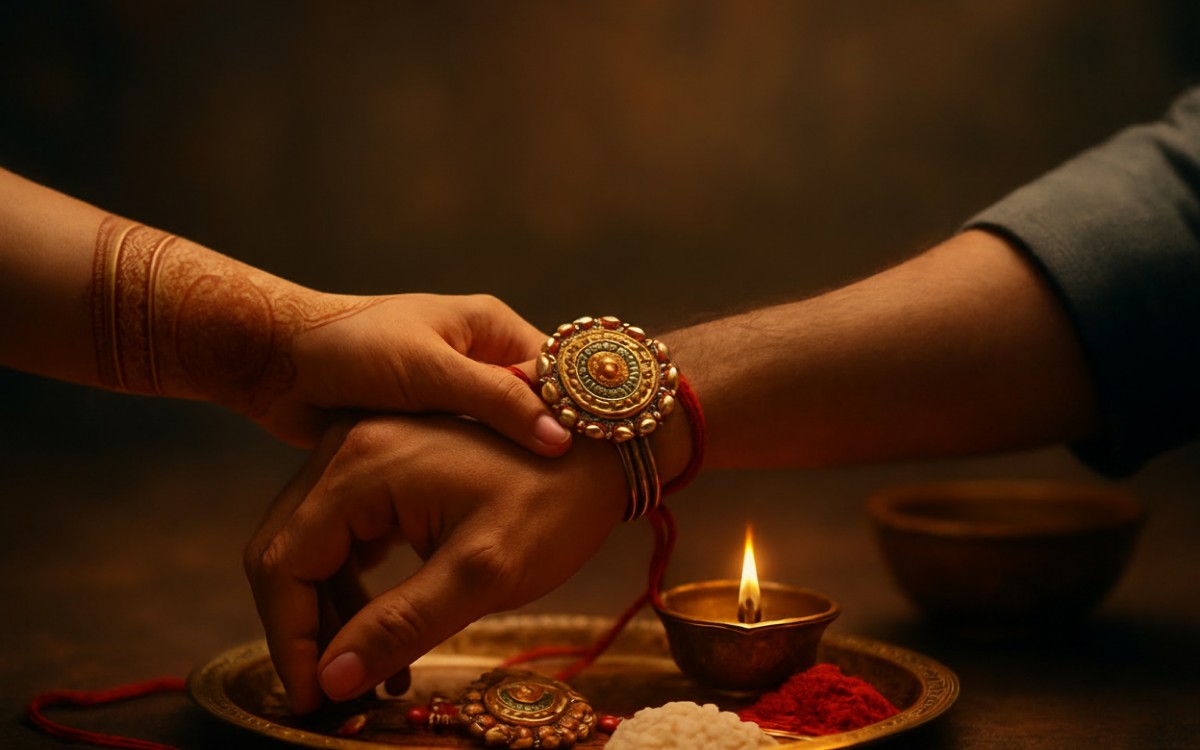
Raksha Bandhan is one of the most cherished and significant festivals within the hindu tradition. It celebrates the sacred relationship between brothers and sisters, symbolised by the tying of a protective thread known as the Rakhi. Beyond the simple exchange of gifts, the festival embodies deep spiritual values of commitment, duty, and mutual respect. It serves as a timely reminder of the enduring strength found in familial bonds and selfless protection.
Literal and Spiritual Meaning of Raksha Bandhan
The term Raksha Bandhan is derived from two Sanskrit words: Raksha, which means protection, and Bandhan, which signifies the act of tying or a bond. Therefore, the festival literally translates to the ‘Bond of Protection’. While the physical act involves a sister tying a silken thread around her brother’s wrist, the spiritual implications are much broader.
In the ancient scriptures, this thread is not merely a piece of string but a Sutra. This sacred thread is believed to carry the power to ward off evil and bring prosperity to the wearer. When a sister ties the Rakhi, she offers her prayers for her brother’s long life and success. In return, the brother takes a solemn vow to protect his sister from all hardships, standing by her through every challenge that life may present.
Historical and Mythological Foundations
The roots of this festival are buried deep in the history and mythology of the subcontinent. These stories provide a glimpse into how the concept of the protective thread has evolved over thousands of years to become the celebration we recognise today.
Krishna and Draupadi
One of the most popular accounts comes from the Mahabharata. It is said that when Lord Krishna injured his finger while beheading the tyrant Shishupala, Draupadi immediately tore a strip from her silken saree and tied it around his wound to stop the bleeding. Touched by her sisterly affection, Krishna promised to protect her whenever she was in distress. This promise was famously fulfilled during the assembly at Hastinapur, proving that the bond of the Rakhi transcends biological relations.
King Bali and Goddess Laxmi
Another significant story involves Goddess Laxmi and King Bali. When Lord Vishnu stayed with Bali to protect his kingdom, Laxmi missed her consort and visited Bali in disguise. She tied a thread on Bali’s wrist during the full moon day of Shravan. When Bali asked what she desired as a gift, she revealed her true identity and asked for the return of Vishnu. Bali, moved by the gesture, honoured the bond and requested Vishnu to return to Vaikuntha.
The Rituals of Shravan Purnima
Raksha Bandhan is celebrated on the full moon day of the lunar month of Shravan. This day is considered spiritually potent and is marked by various rituals that vary across different regions but maintain a core theme of sanctity.
The Preparation of the Thali
The day usually begins with a traditional bath and the preparation of a Pooja Thali. This plate typically contains an oil lamp (diya), vermillion (tilak), grains of rice, sweets, and the Rakhis. Before the ceremony begins, a small prayer is often performed to invoke divine blessings.
Tying the Thread and the Tilak
The sister applies a tilak of vermillion and rice on the brother’s forehead, representing the opening of the third eye or the seat of wisdom. She then ties the Rakhi on his right wrist while chanting traditional mantras. This is followed by the Aarti, where she circles the diya around his face to remove any negative energies. The ceremony concludes with the exchange of sweets, symbolising the sweetness of their relationship.
Evolution in the Modern Era
While the core essence of the festival remains unchanged, the way it is celebrated has adapted to the modern lifestyle. The festival has become more inclusive and diverse, reflecting the changing social dynamics of the twenty-first century.
Inclusivity
In many modern households, the tradition has expanded beyond the brother-sister dynamic. Sisters often tie Rakhis to each other as a symbol of female solidarity and mutual protection. Similarly, many people tie Rakhis to close friends, mentors, or even protectors of society like soldiers and healthcare workers. This shift demonstrates that the ‘bond of protection’ is a universal human value that can be shared by anyone who cares for another.
Digital Rakhi
With many families living across different continents, technology has played a vital role in keeping the tradition alive. Virtual Rakhi ceremonies via video calls have become common. E-commerce platforms allow sisters to send beautifully crafted Rakhis and gift hampers to their brothers across the globe, ensuring that distance does not dampen the spirit of the occasion.
The Cultural Significance of the Rakhi
The Rakhi itself has evolved from a simple cotton thread to an artistic expression. Today, one can find Rakhis made of sandalwood, silk, gold, silver, and even eco-friendly materials that contain seeds.
Supporting Local Artisans
The weeks leading up to the festival see a surge in the local economy. Small-scale artisans and weavers spend months creating unique designs. By choosing handcrafted Rakhis, families contribute to the preservation of traditional crafts and support the livelihoods of thousands of skilled workers.
Environmental Consciousness
Recently, there has been a growing movement toward ‘Seed Rakhis’. These are made from biodegradable materials and contain seeds of plants like tulsi or marigold. Once the festival is over, the Rakhi can be planted in a pot, allowing the bond of protection to grow into a living plant. This modern twist aligns the ancient festival with the contemporary need for environmental sustainability.
Strengthening the Social Fabric
Beyond the individual family, Raksha Bandhan plays a significant role in strengthening the social fabric of the community. It is a time for forgiveness and the renewal of old ties.
The festival often serves as an occasion for large family reunions. Relatives travel long distances to be together, sharing traditional meals and stories. This collective celebration helps in passing down cultural values to the younger generation, ensuring that the heritage remains vibrant and relevant.
Historically, the Rakhi has also been used as a tool for social harmony. Its message of universal peace is perhaps more important today than ever before, as the festival reminds us of our shared humanity and the duty we have to protect one another.
Raksha Bandhan is far more than a ritualistic exchange of threads and gifts; it is a profound celebration of the human heart’s capacity for selfless love and lifelong commitment. By honouring this tradition, you participate in a lineage of protection and respect that has guided the community for ages. Whether celebrated in a traditional home or through a digital screen, the essence remains the same: a promise to stand by those we love. In a fast-paced world, this festival provides a beautiful pause to reflect on the relationships that truly matter, ensuring that the bond of protection continues to flourish for generations to come.