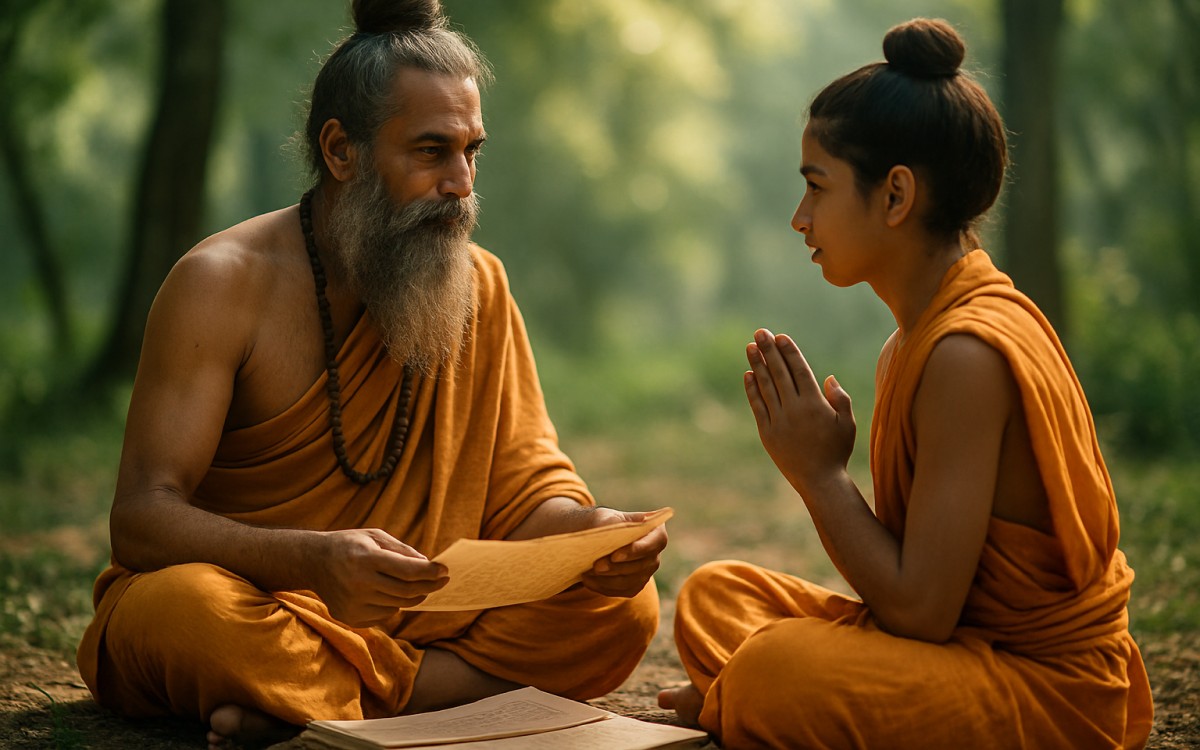
The Guru-Shishya tradition embodies a timeless bond of knowledge transmission, which is central to Hindu culture. Rooted in ancient texts like the Vedas and Upanishads, it fosters profound spiritual growth through personal guidance. This sacred relationship between guru (teacher) and shishya (disciple) emphasizes trust, discipline, and holistic development, shaping moral character and wisdom across generations. Its enduring legacy highlights reverence for learning in everyday life.
Historical Roots
The Guru-Shishya tradition traces back to the Vedic period, where knowledge passed orally from gurus to disciples in serene forest ashrams known as gurukuls. Sages imparted Vedic hymns, philosophy, and rituals through direct interaction, ensuring precise pronunciation and deep comprehension. Texts such as the Upanishads portray gurus as enlightened guides revealing the connection between the individual self (Atman) and universal consciousness (Brahman).
Disciples lived with gurus, serving daily needs while absorbing teachings on ethics, arts, and sciences. This immersive setup built unshakeable discipline and devotion. Unlike formal classrooms, the parampara (lineage) relied on personal transformation, focusing its impact on philosophy.
Prominent lineages preserved sacred knowledge, from Vedic chants to yogic practices. The tradition’s emphasis on oral fidelity prevented distortions, making it a cornerstone of cultural continuity. Its evolution reflects adaptability while upholding core values of humility and surrender.
Sacred Bond Dynamics
At its heart, the Guru-Shishya relationship transcends mere instruction, forming a spiritual covenant marked by mutual reverence. The guru selects a committed shishya through a formal initiation ceremony symbolizing lifelong dedication. This rite often includes mantra transmission, igniting inner awakening.
Trust forms the foundation, with shishyas offering total surrender (sharanagati) to receive pure wisdom. Gurus, embodying divine grace, dispel ignorance like a lamp igniting another. This dynamic nurtures not just intellect but emotional and ethical maturity.
Daily life in the tradition involves seva (selfless service), where shishyas perform chores to cultivate ego-free learning. Such practices foster guru bhakti, elevating the teacher to a divine status in traditions like Bhakti and Vaishnavism. The bond ensures knowledge flows uninterrupted, parampara-style.
Role in Spiritual Growth
Gurus guide shishyas toward self-realization, illuminating paths to moksha (liberation). Through personalized shiksha (instruction), they tailor teachings to individual readiness, addressing karma and samskaras (impressions). Upanishadic dialogues showcase this profound inquiry.
Meditation, yoga, and scriptural study form core practices under guru oversight. The teacher corrects subtle errors, preventing spiritual pitfalls. This one-on-one approach yields deeper insights than mass education, aligning life with dharma (righteous living).
In bhakti traditions, gurus embody the divine, democratizing access to salvation via devotion. Shishyas progress through stages, from service to enlightenment, embodying the guru’s grace in their conduct.
Influence on Arts and Music
The tradition thrives in classical arts, particularly music and dance, where gurus impart nuanced techniques orally. In Hindustani and Carnatic traditions, shishyas memorize ragas and talas through years of imitation and correction.
Gurus emphasize abhyasa (practice) and manodharma (creative intuition), blending technique with soulful expression. Disciples live with masters, absorbing aesthetics alongside values like patience. This preserves intricate forms like kathak or bharatanatyam.
Even today, performances honor gurus via guru vandana, invoking blessings. The parampara ensures cultural arts evolve authentically, linking performers to ancient roots.
Modern-Day Relevance
Contemporary life adapts the Guru-Shishya tradition to formal education and professional mentorships. While gurukuls have waned, its principles inspire teachers who prioritize character over rote learning. Online platforms echo oral transmission through live sessions.
In wellness practices like yoga, certified gurus uphold lineage purity, guiding students safely. Corporates adopt mentorship models drawing from this heritage, fostering loyalty and growth. Families recognize everyday gurus, parents or elders, in nurturing values.
Challenges like commercialization exist, yet authentic lineages persist, revitalizing through global ashrams. The tradition’s focus on inner discipline counters modern distractions, promoting balanced living.
Enduring Cultural Legacy
The Guru-Shishya tradition weaves into festivals like Guru Purnima, where devotees honor mentors with offerings and prayers. It underscores Hinduism’s view of knowledge as sacred, not commodified. Communities celebrate lineages through sampradayas (schools), sustaining diversity.
This parampara influences global spirituality, with many popular figures bridging Eastern wisdom westward. It teaches timeless lessons: reverence accelerates growth, service purifies, and guidance illuminates. In a fast-paced world, it reminds all of learning’s deeper purpose.